Are Solar Panels Worth It in Missouri?
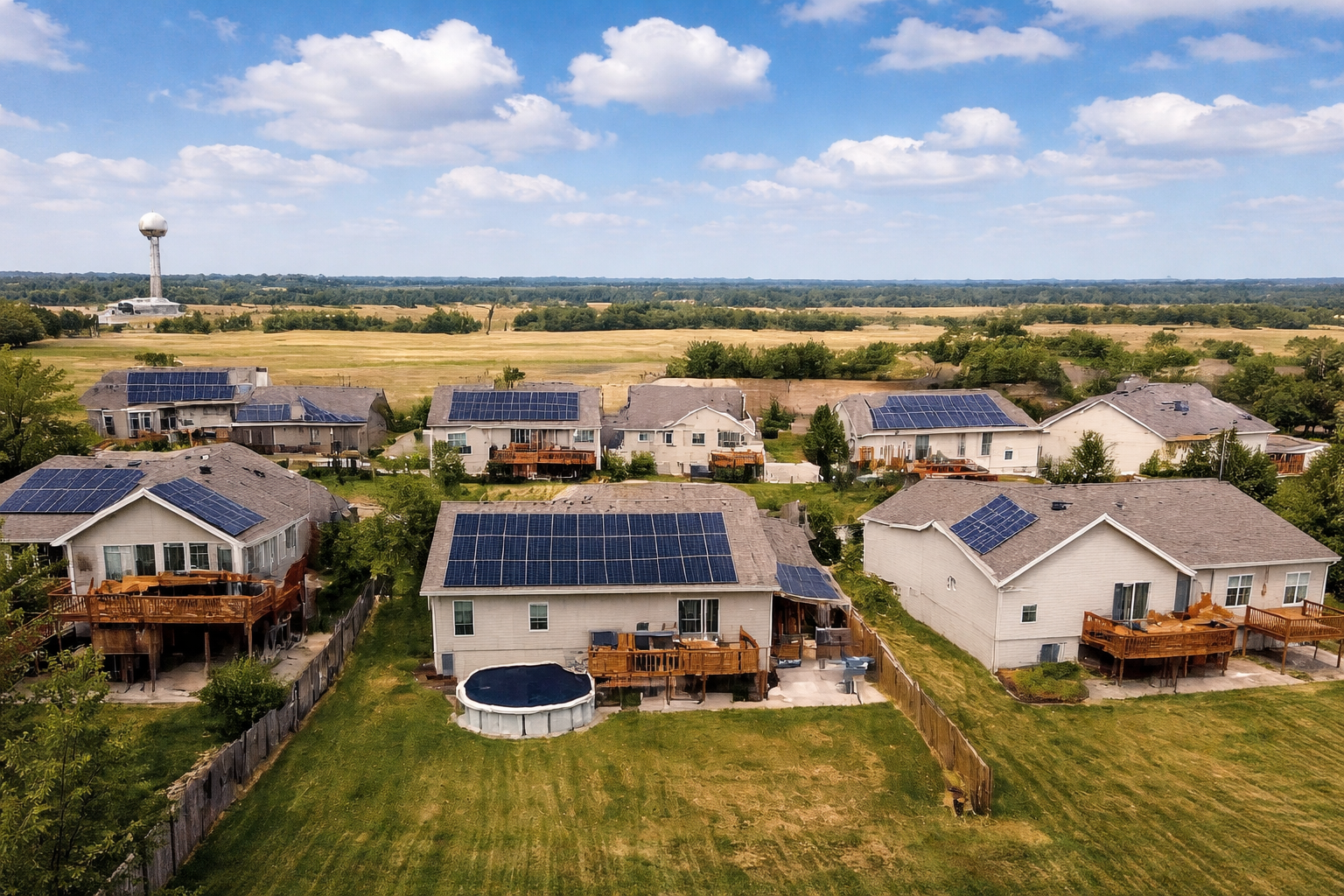
Most Missouri homes save the most by using their solar power on-site. Net metering exists, but net excess generation is commonly credited at a lower avoided-cost value, so chronic overproduction can drag ROI.
In 2026, do not assume a federal residential solar tax credit. The IRS states the Residential Clean Energy Credit is not available for property placed in service after December 31, 2025.
Your bill sets your savings ceiling. Solar offsets the energy portion of your bill far better than fixed charges, so low-usage homes often see weaker payback. DSIRE’s Missouri net metering program summary is a good starting point for the “how exports are treated” conversation.
Solar panels run on light, not heat. Output generally declines as module temperature rises, which is why “sunny but cool” can perform surprisingly well. NREL has a straightforward technical reference on PV temperature effects.
Missouri “sales tax exemption” is commonly misunderstood. Missouri’s solar PV sales/use tax treatment is specific and conditional.
Model production, don’t guess. PVWatts is a fast, credible way to sanity-check yearly kWh production assumptions for your address.
How to Figure Out if Solar Panels Are Worth It in Missouri
What’s your home electricity consumption?
Start with your past 12 months of kWh usage. If you are routinely well under ~500 kWh/month, solar often struggles to produce meaningful savings because fixed charges take up more of the bill. If you are closer to typical Missouri usage, about 1,001 kWh/month, the savings begin to make a lot more sense. You can identify your average monthly usage with your power provider.
How much does solar cost in Missouri?
Installed price varies with roof complexity, electrical upgrades, and whether you add storage. The best way to keep this grounded is to force every quote into the same apples-to-apples framework:
System size (kW)
All-in installed price ($)
Price per watt ($/W)
Itemized electrical scope (service upgrades, trenching, roof work)
Production estimate assumptions (tilt, azimuth, shading, losses)
If the installer will not show assumptions, treat the proposal as incomplete.
Benefits of Leasing Solar in Missouri
Leasing can be a good fit in Missouri if you want solar with minimal upfront cost and less day-to-day responsibility. Many leases offer predictable monthly payments, and because the installer typically owns the equipment, monitoring and maintenance are often handled through the provider rather than you. Leasing also works for homeowners who cannot take full advantage of tax credits themselves since third-party owners generally claim incentives under lease and PPA structures. Savvy investors often go for a hybrid approach by beginning their solar journey on a lease and converting to ownership later down the line, minimizing setup costs and making the purchase after performance and savings are proven.
What’s the payback period?
Payback is simply:
Net installed cost ÷ annual bill savings
In Missouri, payback swings based on two things people skip:
how your utility credits exported power
how much of your bill is fixed charges vs energy charges
A “good” payback is one that still looks acceptable using conservative export-credit assumptions, not a best-case scenario.
What are buy-back rates and net metering rules in Missouri?
Missouri has net metering under the Net Metering and Easy Connection Act. A clean overview is on the Missouri DNR page about net metering and easy connection, and DSIRE summarizes the practical program details and how net excess is treated.
Practical sizing rule for Missouri:
Size to offset a meaningful portion of your annual usage
Avoid designing a system that routinely produces large net excess unless storage is part of the plan
How much sun does your roof actually receive?
Skip “sunny days” and run the numbers for your roof. Use PVWatts with realistic assumptions for tilt, azimuth, and losses.
If an installer’s annual kWh estimate is far above PVWatts without a clear, documented reason (low shade, unusually favorable tilt, strong irradiance data, verified shading study), push back.
FAQs
-
Yes. Start with the Missouri DNR’s net metering overview, then confirm how your specific utility applies crediting rules using the DSIRE summary as a guide.
-
Per the IRS, the Residential Clean Energy Credit is not available for property placed in service after December 31, 2025.
-
Benefits of Solar Energy in Missouri
Lower electric bills when the system is sized correctly
The cleanest savings come from direct self-consumption, using your own kWh instead of buying them. Net metering credits can help, but if net excess is valued at avoided-cost, it is usually better to design for consumption rather than export.
A hedge against future rate pressure
If your household depends heavily on summer cooling, daytime generation can line up well with high seasonal usage. The value of this hedge rises if rates climb, but your design should still stand on conservative assumptions.
Potential resale value upside
Solar can improve resale when the system is owned and transferable. Leases and PPAs can complicate resale because a buyer may need to assume the contract. This doesn’t automatically rule out leasing, it just means you should consider planning to transition to ownership before selling your property.
What to Look Out For When Considering Solar in Missouri
Upfront costs and financing traps
If you see “free solar” or “no cost solar,” assume you are looking at a financing structure that needs careful review. Focus on total installed price and the terms, not the monthly payment.
Incentives and tax credits in 2026: verify, don’t assume
For residential installs, the IRS currently states the Residential Clean Energy Credit is not available for property placed in service after December 31, 2025. If your quote includes a 30% federal credit in 2026, ask the installer to cite the basis in writing and compare it against the IRS page.
Net metering and the oversizing problem
This is the most common Missouri ROI mistake. Ask:
What percentage of annual production is expected to be exported?
How is net excess credited by my utility?
Do credits expire, and on what schedule?
If the proposal depends on exporting a lot of energy, you need a tighter explanation than “net metering makes it worth it.”
Missouri sales tax: don’t budget based on a myth
Missouri’s sales/use tax treatment for solar PV is not a blanket “homeowner solar is always sales-tax exempt.” If you want the exact language, review 12 CSR 10-112.020 and budget conservatively unless your installer can clearly explain how tax is handled in your contract.
Wrap Up: Is Solar Worth It in Missouri?
Solar is often worth it in Missouri if:
Your usage is high enough for meaningful offsets (over 500 kWh/mo)
Your roof is low-shade and usable
The system is sized to maximize self-consumption, not exports
The economics work without assuming a federal residential credit in 2026
Solar is often not worth it if:
Your usage is low and your bill is dominated by fixed charges
Your roof is heavily shaded or near replacement
The proposal relies on oversized exports credited at avoided-cost
The payback only works if a tax credit is assumed that does not apply
Introducing Lumina Works Co.
Lumina Works Co. designs systems for long-term value: high-output REC Monolith panels for maximum production per square foot, resilient electrical architecture built for serviceability, and a process that stays transparent from quote to commissioning. No pressure, no inflated savings claims.
